10 Fastest‑Braking Vehicles CAR Magazine Tested in 2025
By Marius Boonzaier – 26 Dec 2025
CAR Magazine has taken 10 of the fastest‑driving cars on the road and put them through its signature 100‑to‑0 km/h emergency braking test, a 10‑stop run that measures how quickly each vehicle can halt on a standardised strip. The results are in, and the top‑scoring cars reveal that power, weight and brake technology are still king in the world of high‑performance braking.
Tied at second place: BMW X3 20d xDrive M Sport, Ford Mustang Dark Horse and Porsche 911 Carrera Coupé PDK all clocked the same average stopping time.
8. Haval H6 GT 1.5T PHEV 4WD Ultra Luxury – 2.71 seconds
The 2025‑refresh of the Haval H6 saw the flagship GT variant get a plug‑in hybrid (PHEV) powertrain that blends a 1.5‑litre turbocharged four‑cyl with an electric motor for 321 kW and 762 Nm. We weighed it at 2075 kg. With 340 mm ventilated brake discs all around, the GT slid to a stop from 100 km/h in an average of 2.71 seconds.
Photo: Peet Mocke
7. Volvo EX90 Twin Performance Ultra – 2.69 seconds
Volvo’s all‑electric SUV is stacked with 400 mm front/390 mm rear ventilated brake discs, giving the 2712‑kg (tested) EX90 a firm stop in 2.69 seconds. Its twin‑motor setup pushes 380 kW and 910 Nm, the fastest electric power output CAR has tested so far.
Photo: Peet Mocke
6. Jaecoo J7 SHS – 2.67 seconds
This new‑energy model, one of the most fuel‑efficient cars CAR tested in 2025, managed an average 100‑to‑0 km/h braking time of 2.69 seconds. Its 350 mm ventilated discs helped the lightweight vehicle keep its stop in the high‑twos.
Photo: Peet Mocke
5. Audi RS Q8 quattro performance – 2.61 seconds
The 2475‑kg RS Q8 flaunts 420 mm front and 370 mm rear carbon‑ceramic discs, cutting the distance between the “stop” line and the finish line in just 2.61 seconds. A 4.0‑litre twin‑turbo V8 delivers 471 kW and 850 Nm in the 20‑ton SUV.
Photo: Peet Mocke
4. Hyundai Santa Fe Hybrid 1.6T Elite AWD – 2.60 seconds
CAR’s own test of the new Santa Fe Hybrid earned it a score of 2.60 seconds from 100 km/h, making it one of the highest‑scoring cars tested in 2025.
Photo: Peet Mocke
3. Ford Mustang GT – 2.58 seconds
Just a hundredth of a second shy of the “Dark Horse” sister, the GT’s 390 mm front and 350 mm rear ventilated discs brought it to a stop in 2.58 seconds. The 328 kW/540 Nm muscle car is a close second in the braking battle.
Photo: Peet Mocke
2. (tie) BMW X3 20d xDrive M Sport – 2.57 seconds
The cover star of CAR’s April 2025 issue, the X3 20d with its ventilated discs, cut the stopping distance from 100 km/h in an average of 2.57 seconds.
Photo: Peet Mocke
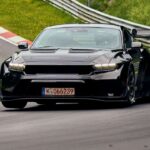
2. (tie) Ford Mustang Dark Horse – 2.57 seconds
CAR’s top Mustang made the final cut, stopping from 100 km/h in 2.57 seconds on the same test strip, beating out the rest of the lineup.
Photo: Ford
2. (tie) Porsche 911 Carrera Coupé PDK – 2.57 seconds
With 350 mm ventilated discs front and rear, the Porsche 911 Carrera Coupé recorded an average 100‑to‑0 km/h time of 2.57 seconds over 37.7 m.
Photo: Peet Mocke
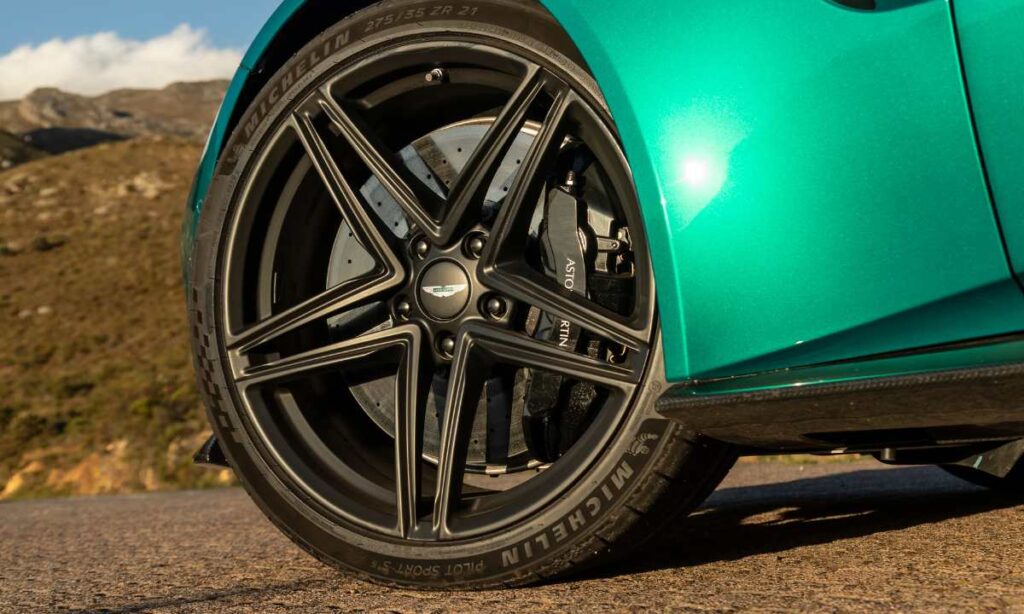
1. Aston Martin Vantage Coupé – 2.52 seconds
The crown jewel of CAR’s 2025 testing, the Vantage Coupé slid from a three‑figure speed to a complete halt in just 2.52 seconds. The 400 mm front and 360 mm rear ventilated discs stopped the 34.26‑m run with surgical precision.
Photo: Peet Mocke
The 10 fastest‑braking vehicles tested by CAR in 2025 show that a blend of lightweight construction, powerful brakes and high torque is still the fastest way to stop on a road. Whether you’re a drag‑strip junkie or a safety‑first commuter, these numbers give a clear picture of how modern cars keep you under full control when the brakes hit.