The third-generation Tucson roamed SA roads from 2016 to 2021. Should you consider it as a used buy in 2026?
[Image: Hyundai SA]
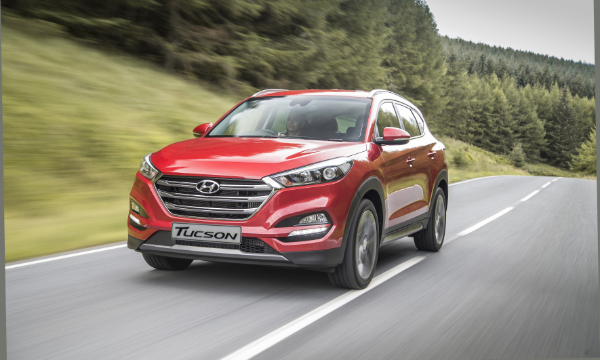
The third-generation Hyundai Tucson was introduced to South Africa in 2016 and moved away from the “ix35” badge to reclaim the globally recognised ‘Tucson’ name. It arrived as Hyundai was aiming to position itself as a premium alternative to established Japanese and European rivals. It was praised for its sharp looks, generous standard equipment, and one of the most comprehensive warranty packages in the country. By the time the fourth-generation model took over in 2021, the third-gen Tucson had built a solid reputation as a reliable family wagon and routinely sat near the top of SA’s best-seller lists. Its success was helped further by the locally developed Tucson Sport derivatives.
A rundown on the Hyundai Tucson
The third-gen Tucson Design used Hyundai’s ‘Fluidic Sculpture 2.0’, with a prominent hexagonal grille and sleek, swept-back projector headlamps that gave it a more mature, athletic look than its predecessor. Inside, the cabin focused on ergonomics and soft-touch materials. The perceived build quality jumped significantly as well. While early, pre-facelift models were criticised for a fairly small 3.8-inch infotainment screen, the 2018 refresh brought a much-needed 7.0-inch floating touchscreen with full smartphone integration.
Powertrain options in South Africa were very varied. The entry-point engine was the naturally aspirated 2.0-litre petrol, delivering 115 kW at 6,200 r/min and 192 N·m at 4,000 r/min. It could be paired with either a six-speed manual or a six-speed automatic, and it managed a claimed combined consumption of 8.9 L/100 km.
For more punch, there was a turbocharged 1.6-litre unit with 130 kW and 265 N·m. It was only offered with a seven-speed dual-clutch transmission (DCT) and could reach 100 km/h from a standstill in about 9.1 seconds. Fuel economy was around 8.5 L/100 km.
The favourite for long-distance cruising was the 2.0 CRDi diesel, which put out 131 kW and a stout 400 N·m of torque. Initially paired with a six-speed automatic, later models switched to an eight-speed automatic. It offered the best blend of performance and efficiency, with real-world fuel use often dropping below 7.0 L/100 km.
A unique South African offering was the Tucson Sport. These models used pedal booster and exhaust tweaks to push the 1.6T and 2.0D engines to higher outputs (up to 150 kW in the petrol version), though this often came at the expense of fuel economy and the longevity of the front tyres.
[Image: Hyundai SA]
What to look our for when buying a used Hyundai Tucson
– DCT shudder & hesitation: On 1.6 Turbo models, the seven-speed DCT can feel jerky in stop-go traffic or show a “shudder” when pulling away. This could point to a software recalibration, and in more severe cases, a worn clutch.
– Hypersensitive throttle (Sport models): The locally fitted pedal booster on Sport models can make the throttle feel very on-off, which can spin the wheels and wear the front tyres faster if you’re not driving with a light foot.
– Carbon buildup (T-GDi): Like many direct-injection turbo engines, the 1.6T can suffer from carbon buildup on the intake valves at higher mileages.
– Panoramic sunroof creaks: On higher-spec models, the large panoramic sunroof can develop minor creaks or squeaks over time.
– Infotainment lag: Pre-2018 models have a fairly basic system, while early touchscreen units can sometimes lag or have connectivity issues.
[Image: Hyundai SA]
Which one to get
The clear choice in the pre-owned market is the 2.0 CRDi Executive automatic (post-2018 facelift). This version offers the better eight-speed automatic and the updated infotainment system. The diesel engine’s 400 N·m of torque makes it a much more relaxed cruiser than the naturally aspirated 2.0 petrol, especially when fully loaded or at higher altitudes. The Executive trim provides all the essential luxuries, including leather upholstery, a rearview camera, and blind-spot monitoring. It doesn’t include the Elite’s panoramic sunroof and AWD, but it’s the best all-round package.