
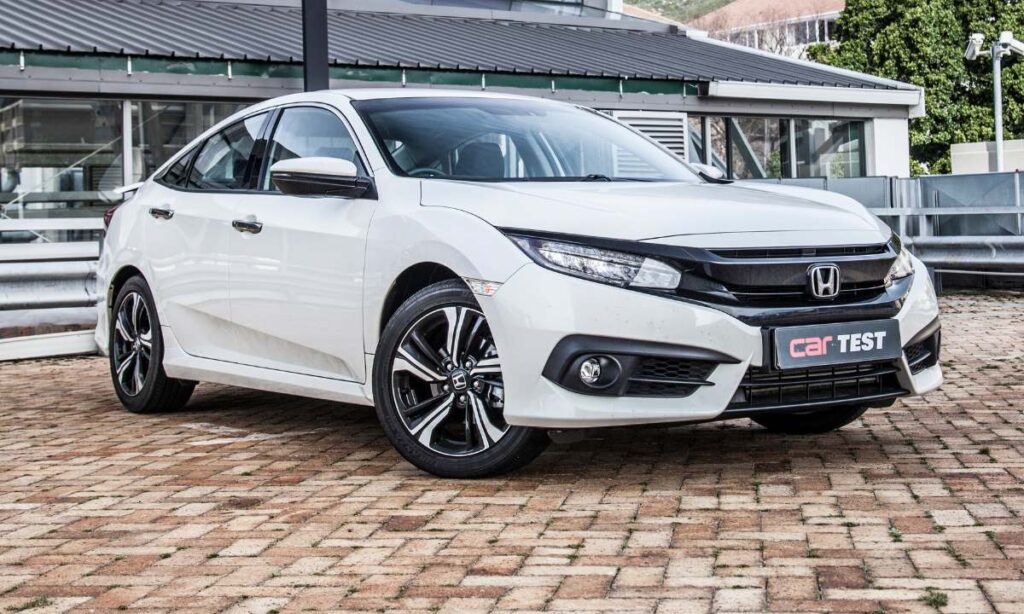
The 10th-generation Honda Civic had a big role to play in South Africa, but is it still as relevant today as it was a decade ago? We explore it as a used buy.
The rise of the crossover has claimed many casualties, but the tenth-generation Honda Civic fought valiantly against the dying of the sedan light. Arriving in South Africa in the latter half of 2016, the FC generation ditched the conservative styling of its predecessor for a more radical, fastback-inspired look. Honda’s engineering goal was clear: lower the center of gravity, widen the track, and bring back the dynamic driving feel the Civic name is known for. In 2019, a mid-cycle facelift addressed early ergonomic issues and refined the exterior a bit.
A rundown on the Honda Civic
The Civic’s structural strength comes from a platform built with ultra-high-strength steel, giving about 25% more torsional rigidity than the previous generation. Inside, the cabin focuses on a low, sporty driving position. The pre-facelift infotainment system relied entirely on a touch-capacitive interface, which drew criticism until the 2019 update added a physical volume knob. Boot space is generous at 424 litres, and the rear legroom rivals that of larger D-segment sedans.
In South Africa, the mainstream powertrain lineup was pared down to two petrol engines, both paired with a CVT. The base engine is the proven 1.8-litre naturally aspirated i-VTEC four-cylinder, delivering 104 kW at 6,500 r/min and 174 N.m of torque at 4,300 r/min. With this engine, the Civic hits 100 km/h from a standstill in 10.4 seconds and returns a claimed 6.3 L/100 km. For those seeking more performance, the 1.5-litre VTEC Turbo engine brings a big boost. It offers 127 kW at 5,500 r/min and 220 N.m of torque – available from as low as 1,700 r/min. This powertrain sharpens responsiveness, cutting the 0-100 km/h dash to 8.2 seconds, while still claiming about 5.9 L/100 km.
The Range isn’t complete without mentioning the Type R, which pumps out 228 kW and 400 N.m and uses a six-speed manual. It’s aimed at high-performance enthusiasts and sits well outside the standard commuter’s reference point.
What to look out for when buying a used Honda Civic
– Air-conditioning condenser failure: micro-leaks can develop in the factory unit due to thin-walled tubing, leading to refrigerant loss and, eventually, a total system failure.
– Sticky electric power steering (EPS): a “sticky” or notched feel in the steering wheel, especially at highway speeds or during fine adjustments off dead-centre. This often needs a software recalibration or a full EPS rack replacement.
– 1.5T oil dilution: the 1.5-litre turbo can suffer from fuel bypassing the piston rings and mixing with the engine oil if the car is used mostly for short trips where the engine doesn’t reach operating temperature.
– CVT fluid degradation: the CVT needs strict fluid-change intervals using only Honda HCF-2 transmission fluid. If neglected, the gearbox can shudder or hesitate on acceleration.
[Image: Honda Civic] Image: CAR
Which one to get
For the sensible buyer, the post-facelift 1.8 Elegance CVT remains the most financially sound choice. While the 1.5-litre turbo offers much better low-end torque, the naturally aspirated 1.8-litre engine is simple and reliable. It avoids potential turbocharger maintenance issues and oil-dilution concerns. The 2019 facelift is also important because it fixes the initial infotainment flaws and brings a more cohesive exterior look.